Water doesn’t always tell you what’s happening at first glance. It can look clear in a glass and still leave mineral deposits around the faucet, taste unusual in coffee, or behave differently when it comes out of the shower.
That’s one reason water treatment can be surprisingly difficult to understand. People naturally judge water by what they can see, smell, or taste, but many water-quality characteristics are invisible.
A better approach is to pay attention to patterns. Is the problem happening throughout the house or only at one faucet? Did it appear suddenly? Does it get worse after heavy rain? Are appliances developing scale? Does the water taste different at different times of day?
Those little details can point toward the right solution.
Begin With the Water Itself
Before installing treatment equipment, find out what’s actually in the water.
A laboratory or professional water analysis can provide information about hardness, pH, iron, sediment, dissolved substances, and other characteristics depending on the test.
For private wells, this step can be especially valuable. Groundwater conditions vary from one property to another, sometimes quite dramatically. A neighbor’s solution may not be the right solution for your home.
Testing also prevents a common mistake: treating a symptom without understanding the cause.
For example, if water leaves reddish staining, the answer might involve iron rather than ordinary sediment. If the water tastes metallic, plumbing or water chemistry could be involved.
The more you know, the less you have to guess.
Some Water Problems Are Mostly Aesthetic
Not every unpleasant water characteristic represents a serious health concern.
Taste, odor, staining, and color can make water unpleasant to use even when the underlying issue is primarily aesthetic. Still, those concerns matter because water is part of everyday life.
Nobody enjoys drinking water that smells strange. Nobody wants to scrub a bathtub every weekend because of stubborn staining.
Treatment should therefore consider both safety and usability.
If the goal is to improve taste or appearance, a targeted filtration system may be enough. If testing identifies a more significant issue, additional treatment may be appropriate.
When Water Tastes or Looks Strange
A sudden change deserves attention.
Foul tastes and color can sometimes be associated with iron, sulfur compounds, sediment, organic matter, or plumbing conditions. The cause isn’t always obvious, and assuming that one filter will fix everything can lead to wasted money.
Pay attention to whether the change is coming from every faucet.
If only one fixture is affected, the problem could be localized to that faucet or its plumbing. If the entire house experiences the same change, the source may be further upstream.
This simple observation can help narrow down the possibilities before any equipment is installed.
Acidic Water Can Be Hard on Plumbing
Water chemistry matters beyond taste.
Acidic water has a lower pH and can interact with plumbing materials in ways that may contribute to corrosion. Homes supplied by private wells can sometimes encounter acidic water depending on local geological and groundwater conditions.
Corrosion can eventually affect pipes, fixtures, and other components.
If water testing indicates a low-pH condition, treatment may involve a neutralizing system or another approach recommended for the specific chemistry.
This is a good example of why testing matters. You can’t reliably identify pH simply by looking at a glass of water.
Conditioners Can Address Specific Water Concerns
Water treatment doesn’t have to be a one-size-fits-all setup.
Some systems are designed to condition water rather than simply filter it. Depending on the equipment and water chemistry, conditioning can help address hardness-related concerns and improve the overall experience of using the water.
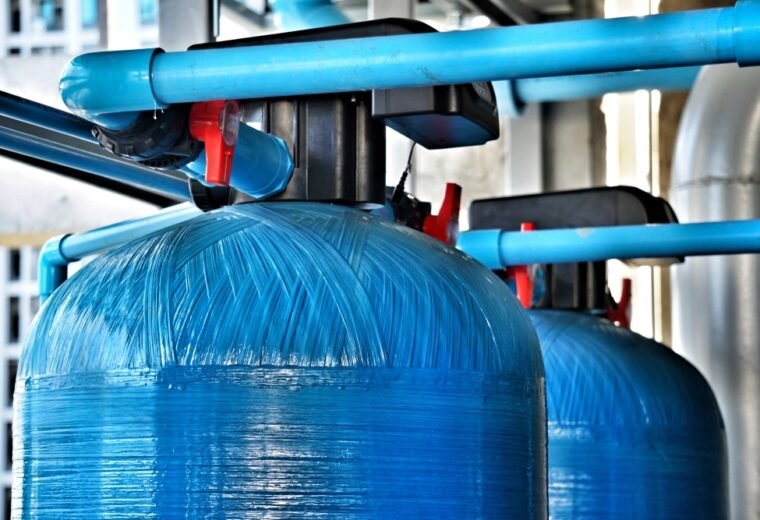
The Evolve Series® conditioners are an example of equipment built around modern water-treatment needs, with system selection still needing to account for water conditions, household demand, and installation requirements.
The product itself is only part of the equation.
A properly sized and maintained system is far more likely to perform well than equipment chosen simply because it has an appealing feature list.
Hard Water Can Create a Chain Reaction
Hard water is one of those problems that seems minor until you notice how many places it affects.
Calcium and magnesium can contribute to scale on faucets, showerheads, appliances, and heating components. Soap may rinse differently. Dishes can develop spots. Water heaters can accumulate mineral deposits over time.
None of these problems necessarily appears overnight.
They build gradually.
That’s why homeowners sometimes don’t realize how much hardness is affecting the property until treatment is installed and the difference becomes obvious.
If scale is a persistent problem, a water test can determine whether hardness is high enough to justify softening or conditioning.
Your Water Heater Can Be a Clue
Water heaters often reveal water-quality issues because they’re constantly exposed to the supply and, in the case of storage tanks, heat the water.
Heating can encourage mineral precipitation and sediment accumulation.
If you hear popping, crackling, or rumbling from the tank, it may be worth having it inspected. Those noises can sometimes indicate sediment buildup.
A water heater problem doesn’t necessarily mean the water itself is responsible, of course. Aging components, heating elements, and other mechanical issues can produce similar symptoms.
Still, the relationship between water quality and equipment condition is worth considering.
Good Treatment Starts With the Right Questions
Before choosing a system, ask yourself a few practical questions.
What is the water source? What has the testing shown? Is the issue hardness, sediment, taste, odor, pH, or something else? How many people use the water every day? What is the peak demand? Which appliances depend on the supply?
These questions may seem basic, but they make equipment selection much easier.
A small point-of-use filter might be sufficient for a taste issue. A whole-house system may be more appropriate when the concern affects multiple fixtures. More specialized conditions may require additional treatment stages.
The answer should come from the water, not from a product brochure.
Maintenance Is Part of the Solution
Even the right equipment won’t perform indefinitely without care.
Filters need replacing. Media eventually reaches its capacity. Control valves may need inspection. Tanks and other components should be checked periodically.
Before buying, find out what routine maintenance involves and what it costs.
A system that requires complicated service every few months may not be the best fit for a homeowner who wants something simple.
On the other hand, a properly maintained system can provide reliable performance for years.
Don’t Chase Perfect Water
It’s easy to get carried away with water treatment.
Once you start researching, there are endless filters, conditioners, membranes, UV systems, softeners, and specialty products to consider. It can feel like your utility room needs its own engineering department.
It doesn’t.
The goal isn’t to remove everything from water. The goal is to address legitimate concerns and make the water appropriate for its intended use.
Sometimes that means treating the whole house. Sometimes it means focusing on one problem at one faucet.
A Little Investigation Goes a Long Way
Water problems are easier to solve when you resist the urge to guess.
Notice changes. Test the water. Look for patterns. Understand what the treatment equipment is designed to do, and make sure it is sized for the property.
If a system is recommended, ask why it is necessary and what specific problem it will address.
Good water treatment isn’t about buying the most complicated equipment available. It’s about making a thoughtful decision based on real conditions.
When you take that approach, the result can be pleasantly simple: better-tasting water, cleaner fixtures, fewer plumbing concerns, and equipment that works the way it should.
Sometimes the best water solution isn’t the flashiest one. It’s simply the one that understands what your water needs — and does exactly that.